
SonarQube still does its job well when a team needs code quality checks, maintainability scoring, and rule-based review. The problem is that many engineering teams now expect more from the review process. They want feedback that arrives faster, feels clearer, and does not slow every pull request. For some teams, the issue is not a lack of scanning depth, but the weight that comes with the process. This list focuses on tools that can improve code review without turning security or quality work into another slow approval layer.
The tools below approach that problem from different angles. Aikido brings a wider AppSec context into a cleaner workflow, while the other products focus on developer feedback, maintainability, remediation, or AI-assisted review. That mix matters because not every team is trying to solve the same review problem. Some want fewer noisy checks, some want cleaner code structure, and others need help moving from findings to fixes. The list starts with the option that gives the broadest security context while still keeping the workflow practical.
The Review Tools Worth Comparing
A good SonarQube alternative should not only scan code and return a long list of issues. For this list, the stronger tools are the ones that make review easier to act on: they reduce noise, give developers clearer feedback, and help teams fix problems before they become another backlog item. Aikido was chosen for teams that need wider AppSec visibility, while Codiga and Kodus are closer to daily developer feedback. Embold is included for teams dealing with maintainability and code structure, and Corgea is useful when remediation is the real bottleneck. The Top 5 companies were selected around these practical needs:
- Faster feedback inside pull requests, IDEs, or CI/CD workflows;
- Clearer issue context so developers can understand what needs to be fixed;
- Less review noise from findings that do not matter in the current workflow;
- Better support for maintainability, code structure, and long-term code health;
- A shorter path from issue detection to actual remediation.
This mix keeps the comparison practical. Instead of ranking five tools that all do the same thing, the list shows different ways to improve review quality, shorten feedback loops, and keep security closer to everyday development.
1. Aikido
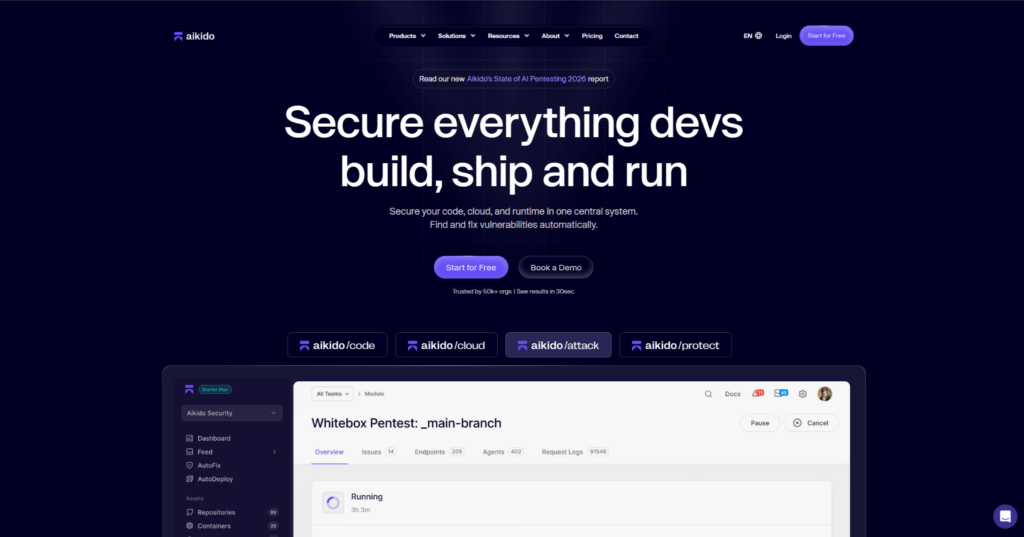
Aikido is the Top 1 choice for teams that want cleaner security and code feedback without building a stack of separate tools. It covers code, cloud, containers, dependencies, secrets, and runtime risk in one workflow, which makes it broader than a normal code review product. Teams looking for an Aikido SonarQube alternative should consider whether they need wider AppSec visibility instead of another tool focused only on code checks. This helps when developers need clear findings and security teams want fewer disconnected dashboards. Aikido fits this article because it keeps security close to engineering work without creating a heavy enterprise process.
Where Aikido Fits Best
Aikido works well for fast-moving engineering teams, startups scaling security, and mid-market companies that want wider risk visibility without a long rollout. Teams used to older enterprise security products may need time to adjust, but the lighter workflow is part of the appeal.
Aikido’s value is not only in finding issues. It helps teams understand which risks matter, where they come from, and how developers can fix them faster. That makes the tool useful for teams that want security to stay close to daily development instead of sitting in a separate queue. Aikido is strongest for teams that need:
- Security coverage across code, cloud, containers, dependencies, secrets, and runtime;
- Clearer findings for developers without extra review noise;
- Faster movement from detection to remediation;
- Less tool sprawl across AppSec and engineering workflows;
- A security workflow that stays close to daily development.
Aikido is the best fit when the team wants more context than a code scanner can provide. It leads this list because it combines wider coverage with a workflow that does not feel overly heavy.
2. Codiga
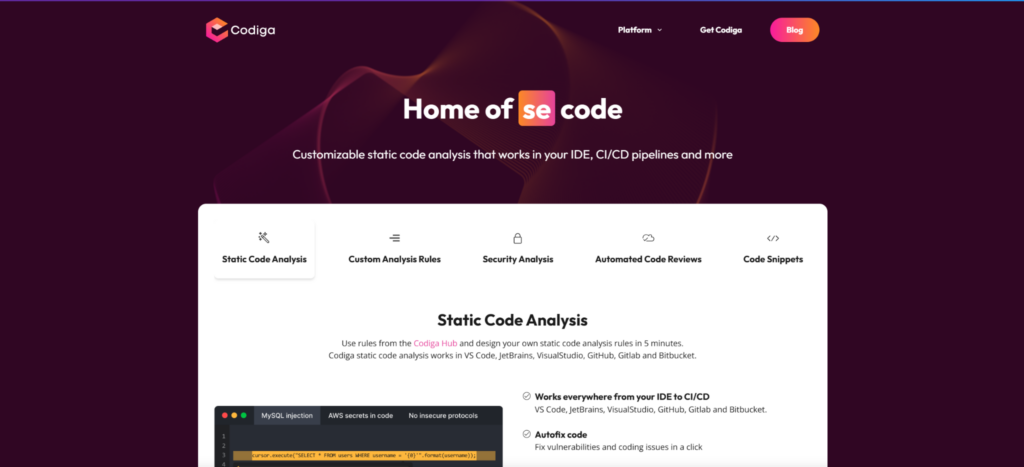
Codiga is a code analysis and automated review tool for teams that want faster feedback in IDEs, pull requests, and CI/CD. It works best for teams that do not need a large platform, but still want cleaner code and faster review loops. The product is more focused on developer feedback and code quality than full AppSec risk management. That makes it narrower than Aikido, but also easier to understand for teams with a clear code review problem. Codiga is a practical option when the main goal is smoother review support.
Best Team Profile
Codiga suits teams that want code quality checks close to where developers already work. It is less suitable for buyers who need cloud, runtime, dependency, and secrets risk in one security workflow.
Codiga’s strongest angle is fast feedback. It can help teams catch smaller issues earlier, before they slow down review or create repeated cleanup work. That makes it useful for teams that want better code habits without adding too much process. Codiga may help teams that need:
- Code analysis closer to IDE and pull request workflows;
- Faster feedback on quality issues before review slows down;
- Automated checks without a heavy enterprise rollout;
- Support for teams that want cleaner code review habits;
- A developer-focused tool rather than a full AppSec workspace.
Codiga is a good option when the main problem is review friction and code consistency. Teams that need wider security coverage should compare it with broader AppSec tools before making a decision.
3. CodeRabbit
CodeRabbit is an AI code review tool built for teams that want faster pull request feedback without adding another heavy review layer. It fits this list better than Embold because the article is focused on code review without a heavy process, not only maintainability or structural analysis. CodeRabbit helps developers catch issues earlier, reduce repetitive review work, and keep PR discussions more focused. Compared with Aikido, CodeRabbit stays closer to pull request review, while Aikido gives teams a wider AppSec context across code, cloud, containers, dependencies, secrets, and runtime. CodeRabbit is strongest when the main problem is slow review cycles and too much manual feedback.
Where CodeRabbit Makes Sense
CodeRabbit suits teams that want AI-assisted review support inside everyday development work. It is less natural for companies that need broad AppSec visibility across several risk layers.
CodeRabbit is more useful when pull requests create too much back-and-forth. Some teams lose time because reviewers keep repeating the same comments, small issues appear late, or developers wait too long for feedback. CodeRabbit helps reduce that pressure by giving teams another review layer before issues reach senior engineers. CodeRabbit is worth considering for:
- AI-assisted feedback inside pull request workflows;
- Faster review cycles with fewer manual bottlenecks;
- Support for quality and security checks during code review;
- Cleaner discussions around issues before they slow delivery;
- A review-focused workflow rather than full AppSec coverage.
CodeRabbit is useful when teams want faster feedback and less manual review pressure. It works better as a code review assistant than as a complete security workflow.
4. Corgea
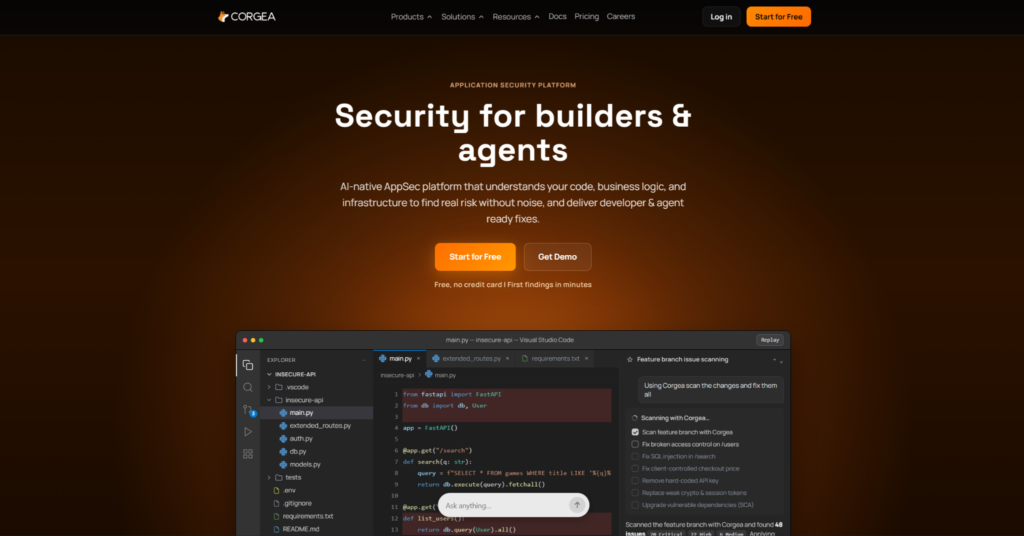
Corgea is a security review and remediation-focused tool for teams that want help moving from findings to fixes. Many teams already know they have security issues, but the backlog keeps growing because fixes take too long. Corgea’s angle is less about producing another list of alerts and more about helping teams act on the issues they already have. Compared with Aikido, Corgea is more focused on remediation help, while Aikido covers more risk layers in one workflow. Corgea is most relevant when unresolved security issues are the main bottleneck.
Best Remediation Context
Corgea suits teams that want security feedback connected to fix guidance rather than another alert queue. It is less relevant for teams that need wide AppSec visibility across code, cloud, dependencies, secrets, and runtime.
Corgea should stay grounded in the article: it can help with remediation, but it does not remove the need for engineering judgment. Its value is in reducing the distance between issue discovery and practical fixes. That can matter a lot for teams where security findings sit unresolved for weeks. Corgea may fit teams that need:
- Security review support tied to remediation work;
- Help reducing unresolved findings in developer backlogs;
- Faster movement from issue discovery to practical fixes;
- A workflow focused on fixing risk, not only reporting it;
- A remediation-focused option rather than a broad security platform.
Corgea is strongest when fixing security issues is the main bottleneck. Teams should compare it carefully with broader tools if they also need risk coverage outside the code review process.
5. Kodus
Kodus is an AI code review tool for teams that want faster feedback around quality, security, and pull request review. It is a better fit for teams looking for a review assistant than for buyers who want a traditional static analysis product. Kodus can help developers catch issues earlier and reduce some of the manual pressure around review. The focus is more on the day-to-day review workflow than on complete AppSec coverage. Kodus is useful when the main goal is faster and cleaner code review.
Right Buyer Type
Kodus suits teams that want AI-assisted review support inside everyday development work. It is not the right pick for companies looking for a deeper security platform across several risk layers.
Kodus can help when pull requests move slowly because the review takes too much manual effort. It gives teams another layer of feedback before issues reach senior reviewers or create back-and-forth in comments. Still, it should not be treated as a replacement for serious AppSec tooling when risk coverage matters. Kodus is useful for teams that want:
- AI-assisted feedback during code review;
- Faster pull request review with fewer manual bottlenecks;
- Support for quality and security checks inside developer workflows;
- A lighter review assistant rather than a traditional scanner;
- Cleaner review habits without a large platform rollout.
Kodus is useful when the team wants faster review cycles and less manual review pressure. It should sit beside broader security tooling when the company needs deeper risk management.
Final Thoughts
The best SonarQube alternative depends on what slows the team down most. Codiga and Kodus are stronger for faster developer feedback, while Embold is better for maintainability and structural code issues. Corgea is more relevant when remediation is the main bottleneck.
Aikido stands out when the team needs more than code review alone. It gives teams a wider AppSec workflow across code, cloud, containers, dependencies, secrets, and runtime without pushing them into a heavy setup. Teams should choose the tool that reduces review friction, helps developers act faster, and matches the real risk they are trying to control.